The Beauty of an Antique Gothic Cabinet: A Statement Piece With History
There are some pieces of furniture that simply fill a room. And then there are pieces that give a room its personality.
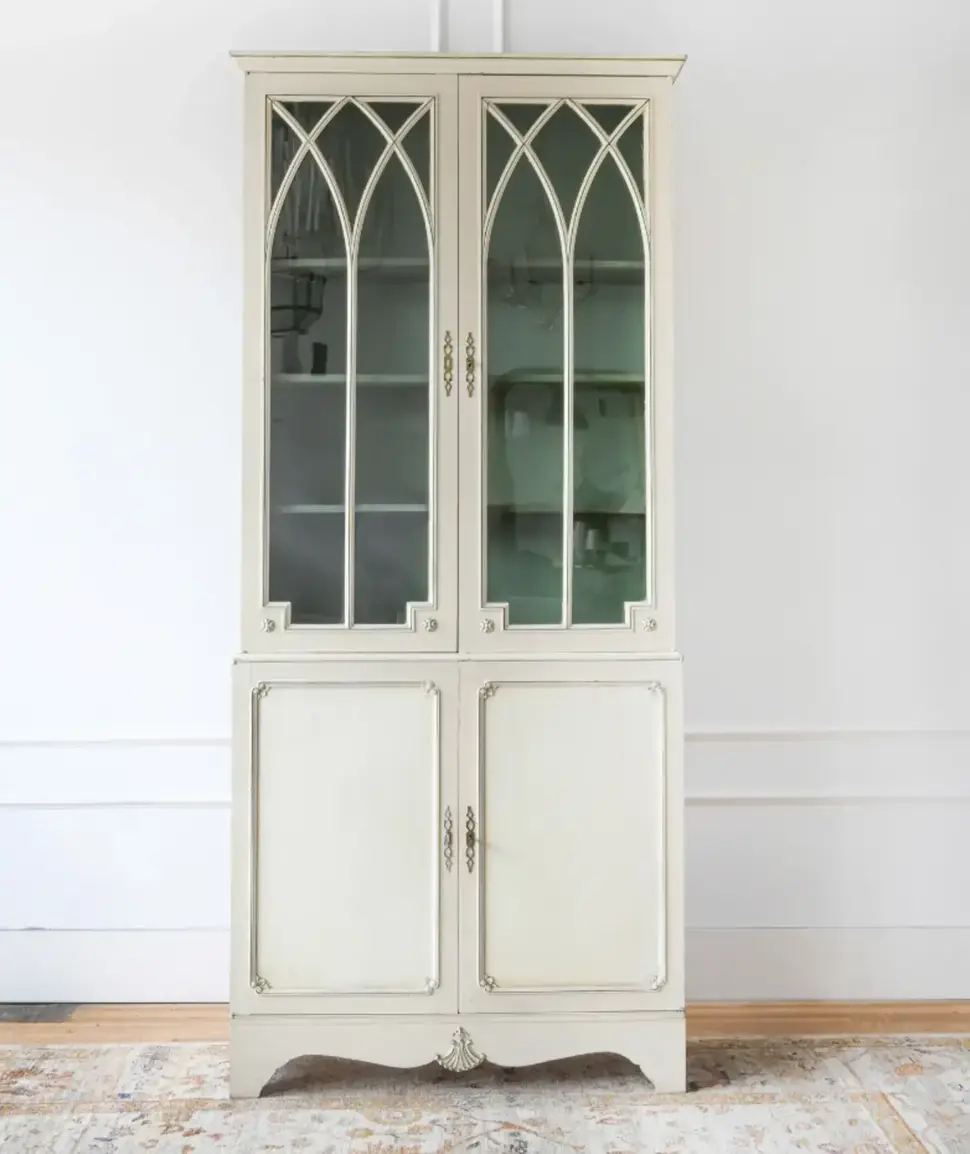
Our Antique Edwardian Gothic Cabinet, dating to circa 1900 in the United Kingdom, is firmly in the second category. Tall, architectural and wonderfully distinctive, it is the kind of antique that can completely transform an otherwise ordinary wall into a focal point.
With its white-painted solid oak construction, mullioned glass doors and impressive 91-inch height, this is not simply storage. It is a piece of English furniture history with a presence that is difficult to replicate with anything new.
Why Gothic furniture feels so special
Gothic Revival furniture has always had a certain drama. Inspired by medieval architecture, the style brought elements such as pointed arches, vertical lines, carved details and architectural proportions into the home.
The Gothic Revival movement was particularly influential in Britain during the 19th century, when designers and makers looked to the Middle Ages for inspiration. Furniture became more architectural and expressive, often borrowing details from churches, castles and historic buildings.
By the Edwardian era, these historical influences could be interpreted in a more restrained way. Rather than feeling like a medieval reproduction, a piece such as this cabinet has a fascinating mix of old-world character and early-20th-century elegance.
That is part of what makes it so appealing today.
A cabinet that makes the most of vertical space
At 91 inches tall, this cabinet has an exceptionally elegant vertical presence.
Instead of spreading across a room, it draws the eye upward. The tall silhouette can make a room feel more architectural while providing generous display space without requiring a large footprint—the cabinet measures just 13 inches deep.
Behind the mullioned glass doors are three interior shelves, creating space for books, ceramics, glassware, collected objects or anything else you want to put on display.
And because the doors are glazed, the contents become part of the design.
Think of it filled with old books and pottery. Or stacks of beautiful linens in a dining room. Or a collection of ceramics, artwork and objects collected over many years.
The cabinet allows the things you love to become part of the room rather than simply being tucked away.
Don't be afraid of a tall antique cabinet
One of the biggest mistakes people make when furnishing a home is choosing pieces that are all roughly the same height.
A room becomes much more interesting when furniture has variation—low tables, medium-height seating and occasional pieces that create a strong vertical moment.
This cabinet does exactly that.
Its height makes it particularly effective against a wall with high ceilings, but it can also work beautifully as a dramatic contrast in a more contemporary home.
And that contrast is important.
You don't need a Gothic interior to appreciate Gothic furniture.
In fact, we think these pieces are often at their best when they're mixed with more relaxed, contemporary surroundings.
Imagine it in a room with:
- A linen sofa
- A vintage Persian rug
- A simple contemporary lamp
- Modern artwork
- A weathered wood table
- A few carefully chosen ceramics
The result isn't “Gothic.” It's layered, collected and personal.
The appeal of painted antique furniture
The white-painted finish is another reason this cabinet is particularly versatile.
Dark antique furniture can sometimes dominate a room. A painted cabinet, however, has a lighter visual presence while still retaining all the character and craftsmanship of an antique.
The white finish allows the architectural details to stand out without making the piece feel overly formal.
It would work beautifully with warm whites, natural linens, muted greens, aged woods and antique brass—making it particularly easy to incorporate into the relaxed, collected interiors that have become so popular.
More than storage
We love antique furniture that has a practical purpose.
A beautiful object is wonderful, but a beautiful object that also solves a storage problem is even better.
This cabinet gives you both.
Use it in a dining room for china and serving pieces. In a living room for books and collected objects. In an entryway for storage and display. Or in a study or library where its architectural character feels completely at home.
The key is not to overfill it.
Leave some breathing room between objects. Mix books with ceramics, framed pieces and small decorative objects. The glass doors allow you to create a curated display while keeping everything protected and organized.
Why buy antique instead of new?
There is a reason people are drawn to antiques even when there are countless new furniture options available.
An antique has already lived a life.
The small imperfections, the aged materials and the details that reveal how something was made give it a quality that is difficult to manufacture convincingly.
This is especially true of furniture inspired by historic architecture. Contemporary reproductions can borrow the shape, but they rarely have the same sense of authenticity.
This Edwardian cabinet was made around 1900. It has survived more than a century and still has a useful role to play in a modern home.
That's the beauty of buying an antique.
You're not simply decorating your home. You're adding another chapter to the object's story.
A piece for the collector who wants something different
There are plenty of cabinets that are easy to find.
There are far fewer that make you stop and look twice.
This one has an unusual combination of scale, painted finish, mullioned glass and Gothic architectural influence. It feels substantial without being heavy, formal without being stuffy, and historic without looking like a museum piece.
For someone who wants their home to feel collected rather than decorated, that distinction matters.
The best interiors rarely look as though everything was purchased at the same time from the same place. They have contrast. They have age. They have pieces that tell you something about the person who lives there.
An antique Gothic cabinet like this can be one of those pieces.
Bring a little English history home
At Gild & Co., we believe the most interesting homes are built slowly—with pieces that have character, craftsmanship and a story behind them.
Our Antique Edwardian Gothic Cabinet is a wonderful example.
Dating to circa 1900 and originating from the UK, it combines the romance of Gothic-inspired furniture with the lighter sensibility of the Edwardian period. Its impressive height, mullioned glass doors and three interior shelves make it as useful as it is beautiful.
And perhaps most importantly, it is a piece you won't see in every other home.
For those who appreciate furniture with history, architectural character and a little bit of drama, this is the kind of antique worth making room for.
Leave a comment
Recent articles
View all
What is it really like going on a buying trip in France?
But it’s also amazing.
...

How to choose the perfect rug for your Vancouver space: size, material and placement tips
Jute vs Sisal Rugs: Which Is Right For Your Home?
How to Mix European Antiques with Contemporary Furniture